Female Last Supper
Goldyn
Installation, 2015–2023
Palazzo Cancelleria della Vaticana, Rome
Curated by Anna Isopo (Borgo Gallery) and Martina Scavone
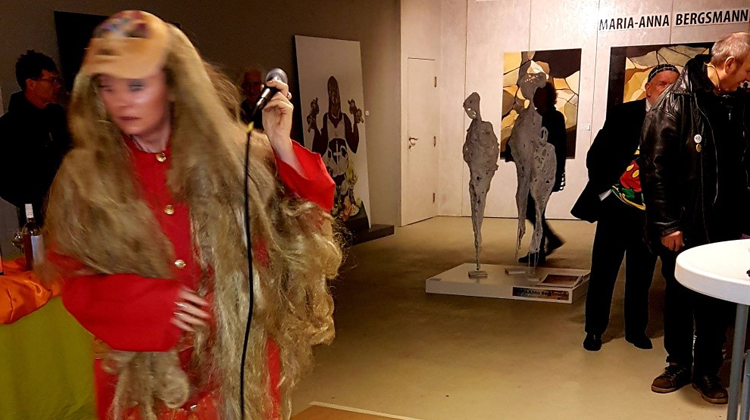
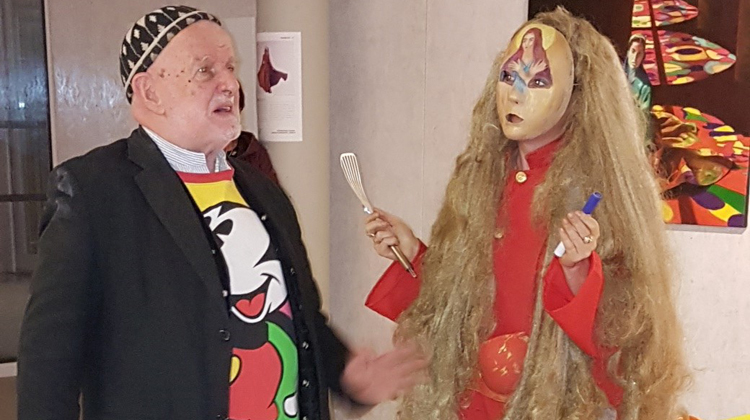
Developed over eight years, Female Last Supper constitutes a radical reconfiguration of one of the most canonical images in Western art history: the Last Supper. In this installation, Goldyn intervenes in a visual and theological structure that has historically excluded female presence from positions of spiritual authority and historical agency.
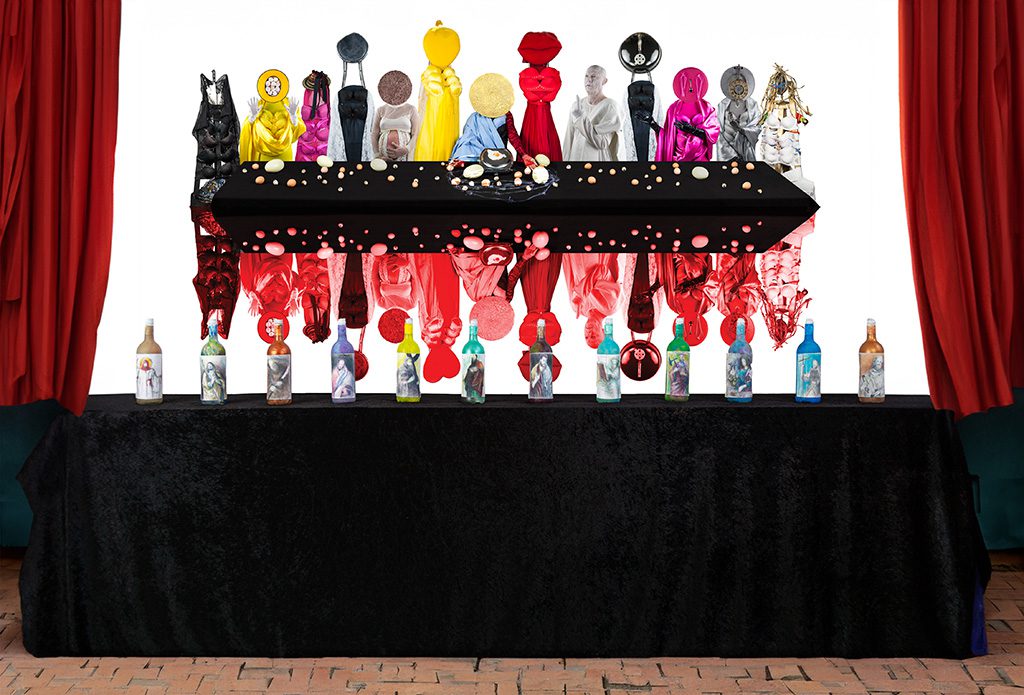
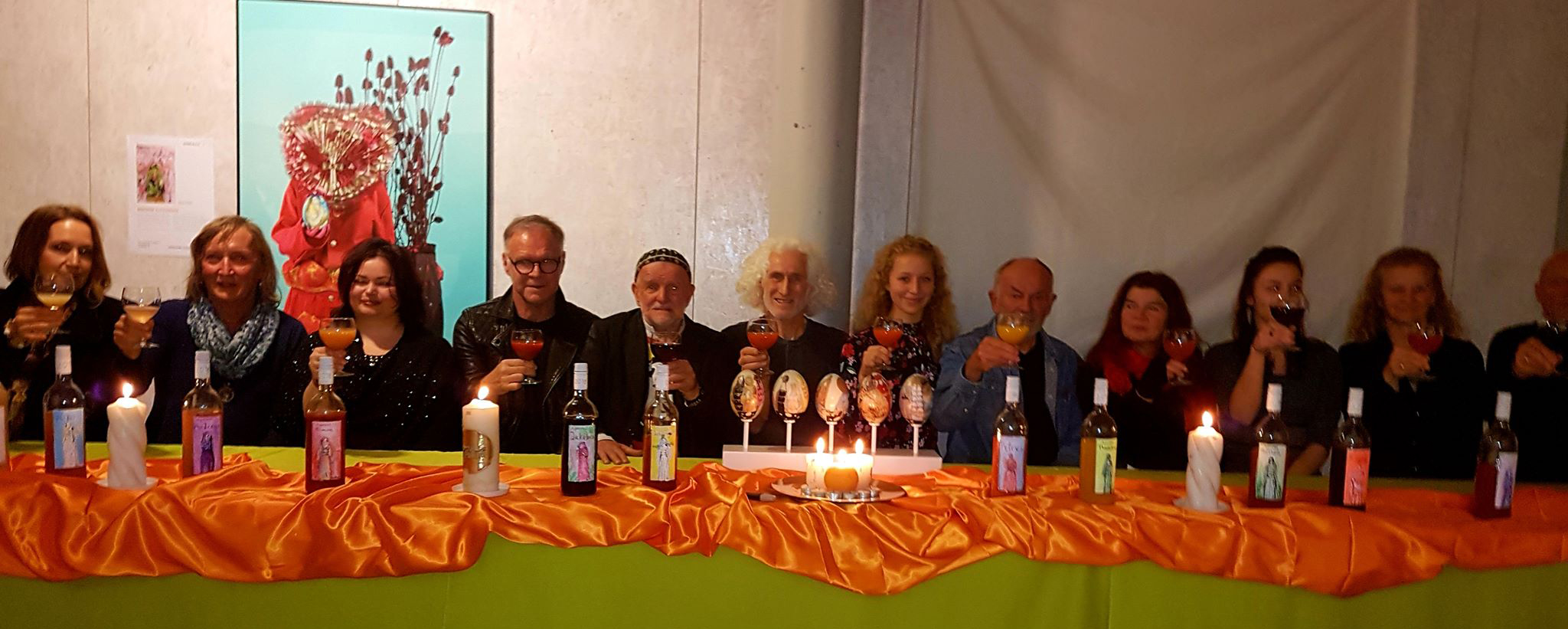
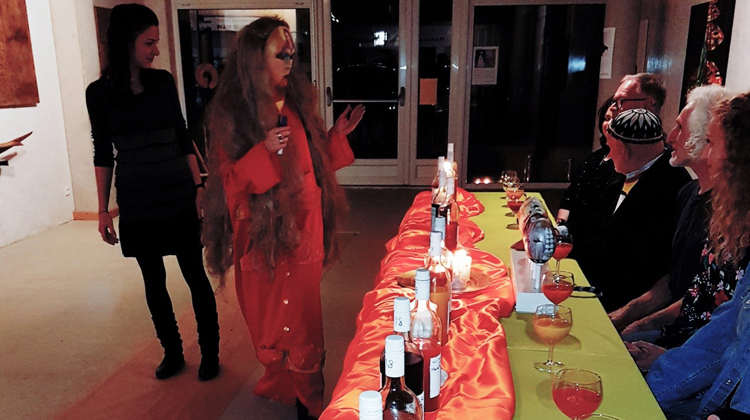
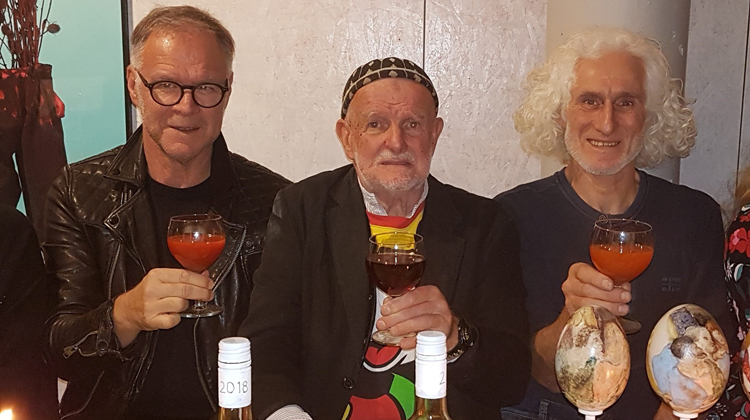
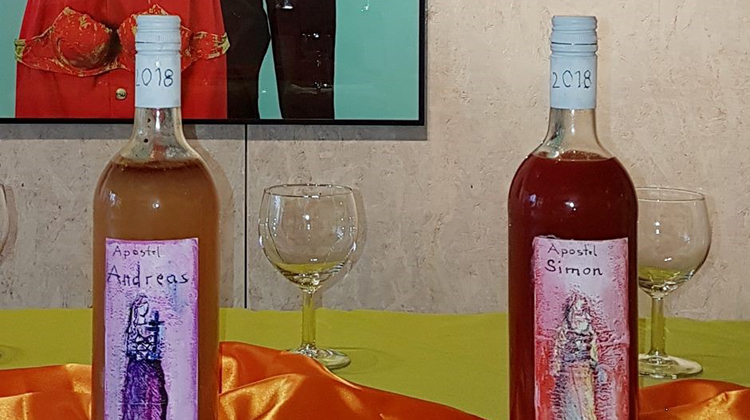
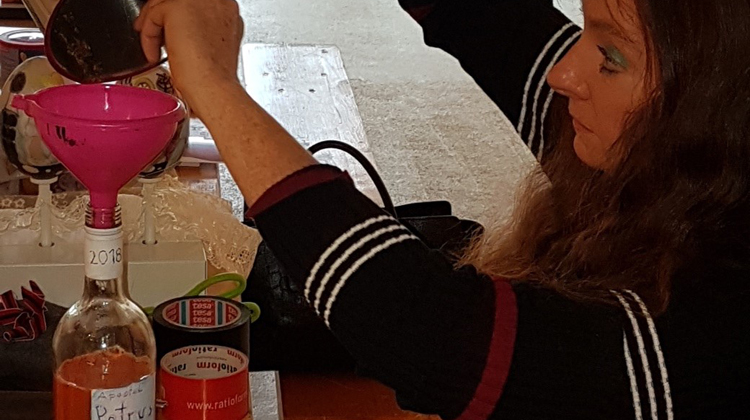
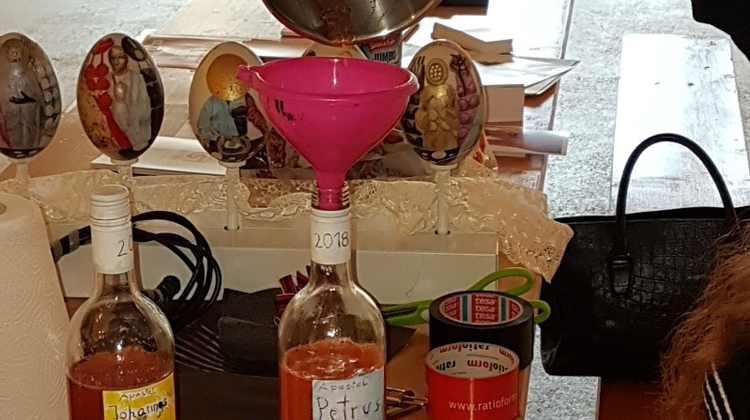
At the center of the work stands a long table bearing twelve beverage bottles. Each bottle carries a label created by Goldyn depicting a female apostle, replacing the traditionally male figures that have defined centuries of Christian iconography. Through this displacement, Goldyn transforms the ordinary bottle into a contemporary reliquary — an object that holds not only liquid, but image, memory, and symbolic power.
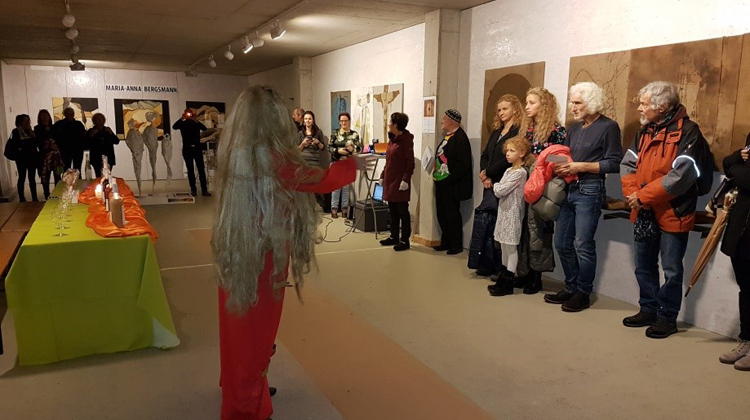
The table becomes a site of ritual and revision. It echoes the Eucharistic reference to wine while simultaneously exposing the gendered architecture of sacred representation. In this gesture, Goldyn does not merely invert a canonical image; she reclaims a space from which women have historically been erased.
Above the table unfolds a constellation of vividly colored sculptural presences. These hybrid forms move between body, garment, relic, fetish, and icon, constructing a speculative congregation that resists fixed interpretation. The installation thus creates a visual field where sanctity, corporeality, and performative presence intersect.
Exhibited at Palazzo Cancelleria della Vaticana in Rome, the work entered into a direct institutional dialogue with a copy of Leonardo da Vinci’s Last Supper housed within the same complex. This proximity is conceptually central: Goldyn’s work does not address the canon from distance, but intervenes within its symbolic architecture.
In this context, Female Last Supper operates as an act of iconographic restitution. It exposes the patriarchal grammar embedded in sacred imagery while proposing an alternative order of presence — one in which women occupy the center of spiritual and historical narrative.
Goldyn’s installation ultimately transforms the Last Supper from a fixed historical image into a critical site of negotiation between gender, power, memory, and representation. The table becomes not a closed composition of inherited authority, but an open structure in which the canon itself is questioned, expanded, and rewritten.